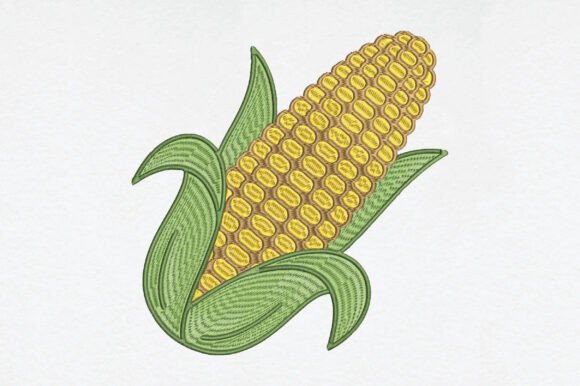
Peeled Corn on Cob Embroidery: A Designer’s Review
When evaluating a new machine embroidery design for my studio, I look beyond the digital preview. As an experienced designer and product reviewer, I need to know how a file translates from screen to fabric. The Peeled Corn on Cob Embroidery design immediately caught my attention as a potential staple for autumn collections and farmhouse-style goods. It promises a fresh, realistic aesthetic that fits perfectly within the House category, but visual appeal is only half the battle. My primary concern is always stitch integrity and commercial viability for fellow makers.
First Impressions and Visual Personality
The initial mood of this embroidery file is undeniably nostalgic yet crisp. Unlike stylized or cartoonish produce motifs, this peeled corn design leans into realism. The interplay between the husk and the kernels suggests depth, which is crucial for creating a high-value handmade product. For an Etsy seller or boutique owner, this level of detail signals quality rather than generic clip art. The layout feels balanced, making it versatile enough to serve as a standalone centerpiece on a tea towel or a subtle accent on custom apparel. It avoids the cluttered look that often plagues food-themed digitizing, maintaining a clean silhouette that reads well even from a distance.
Real-World Application: Stitching a Market Tote
To truly judge this design, I mentally mapped it onto a current client project: a heavyweight canvas market tote intended for a local farmers' market vendor. This scenario tests both durability and aesthetics. Canvas has a distinct fabric texture that can swallow fine details if the stitch density isn't optimized. In this application, the Peeled Corn on Cob Embroidery needs to stand out against natural beige cotton without feeling stiff or bulletproof.
For this tote bag design, I would pair the corn motif with simple, bold typography. The realistic nature of the corn allows the text to remain minimalist, letting the embroidery do the heavy lifting. Customers at craft fairs respond to tactile quality; they want to see defined kernels and organic husk lines, not a flat block of color. If executed correctly, this design elevates a standard utility bag into a premium accessory. It also serves as an excellent test case for commercial embroidery workflows, proving whether the file runs smoothly at production speeds without excessive thread breaks or registration issues.
Fabric Compatibility and Stabilizer Strategy
While this design shines on stable woven fabrics like canvas, denim, and linen, it requires careful handling on other materials. When planning sweatshirt embroidery or custom apparel using knits, the stretch factor becomes critical. A realistic corn design likely uses complex fill stitches to create shading. On stretchy fabric, these fills can distort if the garment shifts during hooping.
- Stable Wovens: Ideal for aprons, pillow covers, and tea towels. Use a medium-weight cutaway or tear-away stabilizer depending on fabric weight.
- Knits and Fleece: Essential for baby embroidery or hoodies. Always use a fusible mesh or adhesive spray to prevent puckering around detailed kernel areas.
- Sheer or Lightweight Fabrics: Proceed with caution. High-density realistic designs may cause drag or tearing. Consider resizing down or choosing a lighter-weight version of the file if available.
- Terry Cloth: For kitchen towels, use a water-soluble topping to keep the running stitches and satin stitch borders from sinking into the pile.
Navigating Technical Constraints and Hoop Sizes
One common pitfall with botanical and food designs is assuming they scale infinitely. Before committing the Peeled Corn on Cob Embroidery to a small hoop size, verify the minimum dimensions. Reducing a realistic design too aggressively can cause overlapping stitches, leading to thread buildup and needle deflection. Conversely, enlarging it significantly might reveal gaps in the fill pattern unless the file was specifically digitized with scalable vector logic.
I also advise checking the design's performance on curved surfaces. While perfect for flat items, placing this on a structured cap requires verifying that the vertical height fits within your cap frame’s safe zone. Detailed corners and tiny elements near the husk tip are usually the first to suffer on curved or textured substrates. If you are producing embroidered patches, ensure the border definition remains sharp after trimming. For baby embroidery, safety is paramount; check for any loose jump stitches or overly dense areas that could irritate sensitive skin or snag little fingers.
Color Theory and Thread Selection
The success of this digital embroidery file relies heavily on thread colors. Realistic corn isn't just one shade of yellow. To achieve the promised fresh look, you will likely need multiple gold, cream, and green tones for shading. Before starting a production run for your craft business, test your palette on scrap fabric. What looks vibrant on a monitor can appear muddy when stitched with polyester or rayon thread.
Consider the background contrast as well. Bright yellow corn pops beautifully on navy, charcoal, or forest green backgrounds but might vanish on white or cream fabric unless outlined effectively. For holiday embroidery or Thanksgiving-themed goods, richer, warmer thread tones enhance the seasonal vibe. Always run a grayscale mockup to check value contrast; if the design looks flat in black and white, it will lack dimension in color regardless of your thread brand.
Commercial Viability for Sellers and Makers
For those selling finished goods or design assets, professionalism builds trust. A poorly registered design screams amateur. When listing products featuring Peeled Corn on Cob Embroidery, your photography should highlight the stitch clarity. Customers buying personalized gifts or home decor want assurance that the item is durable and washable. Mentioning specific stabilization methods or thread types in your product description demonstrates expertise and justifies a higher price point.
If you are using this for printable mockups or digital previews, ensure the rendering accurately represents the stitch direction and texture. Misleading customers with smooth vector graphics when the actual product is textured embroidery leads to returns and negative reviews. Authenticity sells. Furthermore, always confirm licensing terms before incorporating this design into merchandise for sale. Understanding whether you have rights for physical products versus digital redistribution protects your business long-term.
Essential Pre-Stitch Checklist
Before loading this file into your machine for a final project, run through this practical evaluation list:
- Test Stitch: Never skip this step. Use the exact fabric and stabilizer combination intended for the final piece.
- Density Check: Feel the sample. Is it too stiff? Too sparse? Adjust pull compensation if necessary.
- Wash Test: Launder the sample to check for shrinkage or distortion, especially for kitchen linens and apparel.
- File Verification: Confirm the format matches your machine and that no corruption occurred during transfer.
- Mockup Validation: Compare your physical sample against your digital listing photos to ensure consistency.
The Peeled Corn on Cob Embroidery design holds significant promise for makers focusing on kitchen decor, farm themes, and seasonal goods. Its realistic charm offers a refreshing alternative to generic patterns, provided it is treated with technical respect. By understanding its behavior across different fabrics and applications, you can transform this digital asset into a tangible, high-quality product that resonates with buyers and stands the test of daily use. Whether you are stitching a single heirloom gift or fulfilling wholesale orders, thoughtful execution is what separates a hobbyist from a professional brand.